
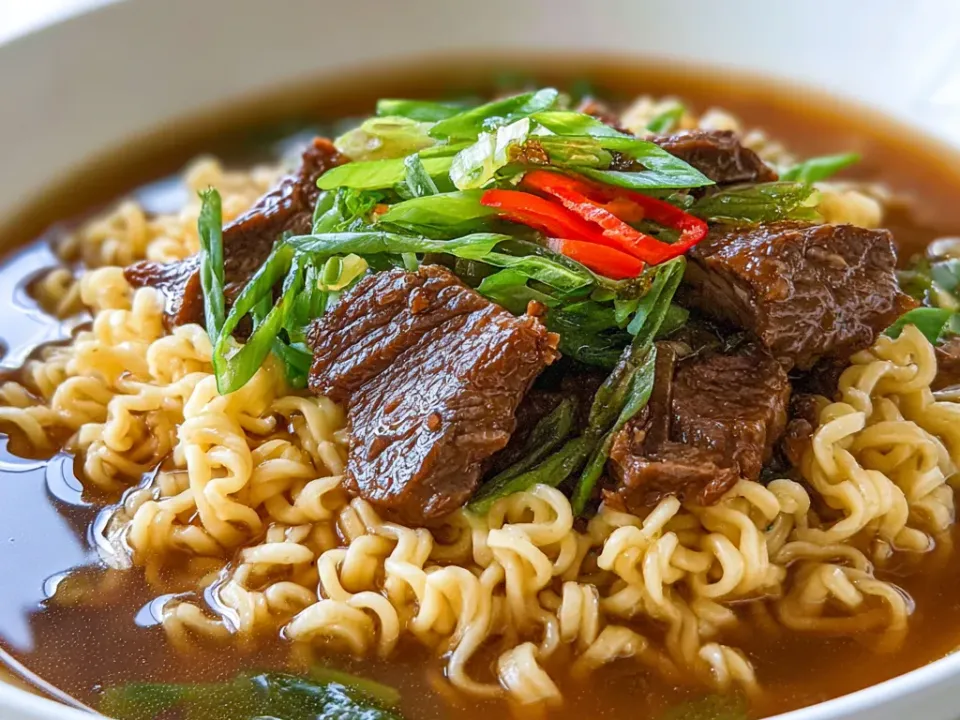
This is a slow-cooker noodle bowl: chuck roast braised all day in a soy, ginger and garlic broth, then noodles cooked straight in that broth at the end. It is Asian-inspired, and the sauce is built from soy, oyster and hoisin rather than from any one tradition.
The last ten minutes of this recipe matter more than the eight hours before them. The beef is forgiving. The noodles are not.
When Things Go In
Almost everything about this recipe is unattended, and then the last twenty minutes are not. Four moments matter, and three of them are close together at the end.
At the start
Beef, the whisked sauce, mushrooms and carrots
Steps 2 and 3. Mushrooms and carrots can take the full cook; they are the only vegetables that go in early.
After 7–8 hours
Shred or slice the beef
Step 4, once the beef is very tender. The optional cornstarch slurry goes in here too, for 15–20 minutes on HIGH.
Then
Bell pepper and spinach or bok choy
Step 5. These go in near the end deliberately — an eight-hour bell pepper is not a bell pepper any more.
Last 5–8 minutes
The ramen noodles, submerged
Step 6. Stir gently once or twice and stop as soon as they are just tender. This is the only window in the recipe that is genuinely short.
How to Make It
Sear the beef, optionally
Season with salt and pepper and brown in batches in a hot skillet, then transfer to the cooker. Step 1 marks this optional.
Whisk the sauce
Beef broth, soy sauce, oyster sauce, hoisin, brown sugar, rice vinegar, ginger, garlic, chili-garlic sauce and sesame oil, combined in a bowl and poured over the beef.
Add the long-cook vegetables and go
Mushrooms and shredded carrots in, lid on, LOW for 7–8 hours or HIGH for 3.5–4.5, until the beef is very tender.
Shred, and thicken if you want to
Shred or slice the beef. For a heavier broth, stir in the cornstarch slurry and cook on HIGH for 15–20 minutes.
Add the quick vegetables
Bell pepper and spinach or bok choy go in now, with the cooker on HIGH.
Cook the noodles in the broth
Submerge the ramen and give it 5–8 minutes, stirring gently once or twice, until just tender.
Taste, then serve
Adjust with soy, salt or pepper, then bowl it up with green onion greens, sesame seeds and a squeeze of lime.
Getting the Noodles Right
Submerge them. Step 6 uses that word, and it is the difference between noodles that cook evenly and noodles that end up half-soft and half-raw where they sat above the liquid. Push them under with a spoon if they float.
Five to eight minutes, stirring gently once or twice. Instant ramen is already cooked and dried, so it is rehydrating rather than cooking, and it goes from firm to collapsed quickly. Taste at five.
If you are cooking for people arriving at different times, hold the noodles back and cook them in portions rather than all at once. Noodles left sitting in hot broth keep absorbing it, and an hour later you have neither soup nor noodles.
Why This Recipe Works
- The noodles cook in the braising liquid, not in water. By the time they go in, that liquid has had beef, mushrooms, soy and ginger in it for eight hours. Cooking the noodles separately and ladling broth over them gives you a noticeably plainer bowl.
- The vegetables are split by how long they can take. Mushrooms and shredded carrots go in at the start and hold up. Bell pepper and greens go in at step 5, minutes before serving, and keep their bite.
- The sauce is whisked before it meets the beef. Step 2 combines all eleven liquid and aromatic ingredients in a bowl first, so nothing pools — brown sugar and cornstarch-free sauces both need to be dissolved rather than dropped in.
- Thickening is optional and late. The cornstarch slurry at step 4 is offered only if you want a heavier broth. Skipping it leaves a thinner, soup-like bowl, which is also correct here. The Korean BBQ beef uses the same slurry trick for the opposite purpose — there it is thickened deliberately until glossy, because that sauce is meant to coat rather than pool.
Ingredient Notes
- Beef chuck roast
- 2 lb, trimmed. You have a choice: cut into 1.5-inch chunks, or leave whole and shred later. Chunks hold their shape in a bowl; shredded beef distributes through the broth.
- Instant ramen noodles
- Three 3 oz packets, seasoning discarded, or 9 oz dried ramen. The seasoning packets would double the salt in a broth that already has a quarter cup of soy sauce.
- Oyster sauce and hoisin
- 2 tbsp each; the hoisin is marked optional and described as being for sweetness. Together they are what makes the broth taste finished rather than salty.
- Toasted sesame oil
- 1 tsp, in the whisked sauce. A small amount against 4 cups of broth — it is a background note, not the dominant flavour.
- Chili-garlic sauce or sriracha
- 1 tbsp, optional and explicitly to taste. It is the only heat in the recipe, so it is worth adding cautiously and adjusting at the end.
Success Tips
- Sear the beef if you have time — step 1 marks it optional, in batches, until browned.
- Grate the ginger rather than chopping it. Grated ginger dissolves into the broth; chopped ginger stays as pieces you bite into.
- Taste at step 7 before adding any more soy. Eight hours of reduction concentrates what is already there.
- Keep the green onion greens back for the bowl rather than adding them all at the start — they are divided for exactly that reason.
Serving Ideas
Served in bowls with the green onion greens, sesame seeds and a squeeze of lime, as step 8 has it. The lime is worth not skipping: it cuts a broth that is otherwise entirely savoury and sweet.
Storage and Reheating
Refrigerate
Store the broth and beef separately from any leftover noodles. Noodles left in broth keep swelling and will be soft by the next day.
Reheat
Reheat the broth and beef, then add fresh noodles for a few minutes as you would at step 6. Reheated noodles that have already sat in liquid do not recover.
Frequently Asked Questions
Why throw away the ramen seasoning packets?
The broth is already seasoned — a quarter cup of soy sauce, oyster sauce, hoisin and 4 cups of beef broth. Discard the packets; adding them on top would make the bowl very salty.
Can I cook the noodles separately?
You can, and it is the better choice if you are not eating everything at once. You lose a little — the noodles are meant to rehydrate in eight hours' worth of braising liquid — but you avoid noodles that oversoften while they wait.
Should I cube the beef or leave it whole?
Either works: 1.5-inch chunks, or whole and shredded at step 4. Chunks stay distinct in the bowl; shredded beef spreads through the broth and catches in the noodles.
How do I get a thicker broth?
Step 4 offers a cornstarch slurry — 1 tbsp cornstarch with 1 tbsp water — stirred in and cooked on HIGH for 15–20 minutes. It is optional; without it the bowl stays soupy.