
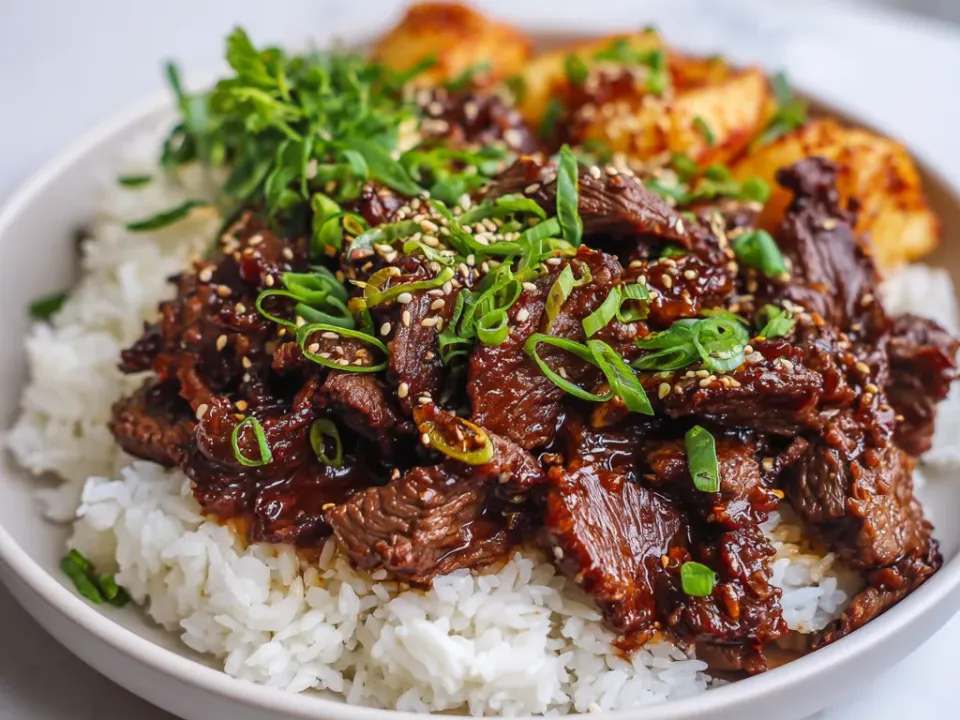
A whole chuck roast goes into the cooker under a sauce of soy, brown sugar, gochujang, rice vinegar, sesame oil and grated pear. Six to eight hours later it shreds, and the sauce it cooked in is thickened until it turns glossy and tossed back through the meat.
There is no browning and no skillet — fifteen minutes of prep, and all of it is whisking. What it asks for instead is a taste at the end, and a correction if the balance has drifted.
Why This Recipe Works
- The sauce is complete before it goes in. Whisking soy, sugar, broth, gochujang, vinegar, sesame oil, garlic, ginger and pear together means the sugar dissolves and the gochujang disperses. Dropped in separately, the paste would sit in a clump and the sugar would settle.
- Grated pear does two jobs. It sweetens, and because it is grated rather than sliced it breaks down completely into the sauce over six hours rather than staying as fruit.
- The onion goes underneath. Step 1 puts sliced onion in the bottom before the beef, so the roast sits on a layer rather than directly on the hot base.
- The sauce is thickened after the beef comes out. Skimming the fat first, then adding the slurry to clear liquid, is what produces a glossy sauce rather than a greasy one — and the beef goes back into it only once it is ready.
How to Make It
Line the cooker with onion
Thinly sliced onion goes in the bottom first.
Whisk the sauce
Soy sauce, brown sugar, beef broth, gochujang, rice vinegar, sesame oil, garlic, ginger and the grated pear, combined in a bowl until the sugar has dissolved.
Add the beef and pour over
The chuck roast goes on top of the onion, then the sauce goes over the top. Carrot matchsticks go in here if you are using them.
Slow cook
Covered, LOW for 6–8 hours or HIGH for 4–5, until the beef is fork-tender.
Shred
Move the beef to a board and pull it apart with two forks, discarding the large fat pieces.
Skim, then thicken
Skim the fat from the cooking liquid, set the cooker to HIGH, and whisk in the cornstarch slurry.
Cook to a gloss
10–15 minutes, stirring, until the sauce thickens and turns glossy.
Return the beef
Tip the shredded beef back in and toss it through the sauce until coated.
Taste and correct
Extra vinegar for brightness, extra sugar for sweetness. Then serve over rice or in lettuce leaves with green onion and sesame seeds.
How the Sauce Balances
Everything except the beef is whisked together in one bowl before anything cooks. Four things are being held against each other, and step 9 explicitly asks you to correct the balance at the end.
- Salt1/2 cup low-sodium soy sauce
- The backbone, and the reason it is low-sodium — a full-salt soy at this volume would leave nowhere to go once the sauce reduces.
- Sweet1/3 cup brown sugar + 1 grated pear
- Two sources rather than one. The sugar is direct; the grated Asian pear or sweet apple dissolves into the sauce over six hours and sweetens it more gently.
- Sour2 tbsp rice vinegar
- The counterweight to the sugar. Without it the sauce reads as flat and syrupy rather than sweet-savoury.
- Heat2 tbsp gochujang
- Chili paste rather than chili flakes, so the heat arrives with fermented depth and body rather than as a sharp edge.
Step 9 is the instruction that matters: taste before serving and adjust with extra vinegar for brightness or extra sugar for sweetness. The sauce has been reducing for six hours by then, and what was balanced in the bowl may not be balanced in the pot.
What 'Glossy' Actually Means
Step 7 asks you to cook the sauce until it 'thickens and turns glossy', and that is a visual cue rather than a timing one. Cornstarch goes cloudy first and then clears as it comes up to temperature; the shine appears at the point it has finished setting.
Skimming before the slurry is what makes it possible. Fat suspended in the liquid keeps the surface dull no matter how much starch goes in, which is why step 6 puts skimming first.
If it has not thickened after fifteen minutes, the cooker has probably not come back to a real simmer with the lid off. Give it longer rather than adding more starch — a second dose of cornstarch will thicken past glossy into gluey.
The beef ramen noodles use the same slurry with the opposite intent: there it is optional and only meant to give the broth a little body, because that dish is served as soup rather than as something that clings to rice.
Serving Ideas
Serve it two ways: over cooked rice, or in lettuce leaves as wraps. Both are finished with sliced green onion and toasted sesame seeds.
Ingredient Notes
- Asian pear
- One, grated. A sweet apple is a direct substitute. Grating rather than chopping is what lets it disappear into the sauce.
- Gochujang
- 2 tablespoons of Korean chili paste. It carries the heat in this recipe and there is no other chili ingredient, so it is worth tasting before assuming the level is right for you.
- Low-sodium soy sauce
- Half a cup, with tamari given as an alternative. Low-sodium is specified rather than incidental — the sauce reduces on HIGH for 10–15 minutes at the end.
- Cornstarch slurry
- 1 tablespoon cornstarch with 1 tablespoon water. It goes into skimmed liquid on HIGH, not into the full pot.
Success Tips
- Dissolve the brown sugar fully while whisking. Undissolved sugar sinks and caramelises against the base of the cooker.
- Grate the ginger rather than mincing it.
- Skim properly. A chuck roast releases a lot of fat over six hours and the difference between a skimmed and unskimmed sauce is obvious.
- Taste before you serve, not before you thicken — reducing concentrates the salt as well as everything else.
Storage and Reheating
Refrigerate
Refrigerate the beef in its sauce in a sealed container. Unlike a thin broth, this sauce is meant to coat, so keeping them together is correct here.
Reheat
Warm gently and stir. The sauce tightens when chilled and loosens again with heat; a splash of water helps if it has gone past coating.
Frequently Asked Questions
What if I cannot find an Asian pear?
One sweet apple is a direct substitute. Either way it should be grated, so that it dissolves into the sauce rather than staying as pieces of fruit.
How hot is this?
The only heat comes from 2 tablespoons of gochujang against half a cup of soy sauce and a third of a cup of brown sugar, so it is mild and mostly savoury. Gochujang brands vary, so taste the whisked sauce before it goes on the beef.
Should I sear the roast first?
This recipe does not ask you to — there is no browning step at all. The sauce is doing the flavour work rather than the Maillard reaction.