
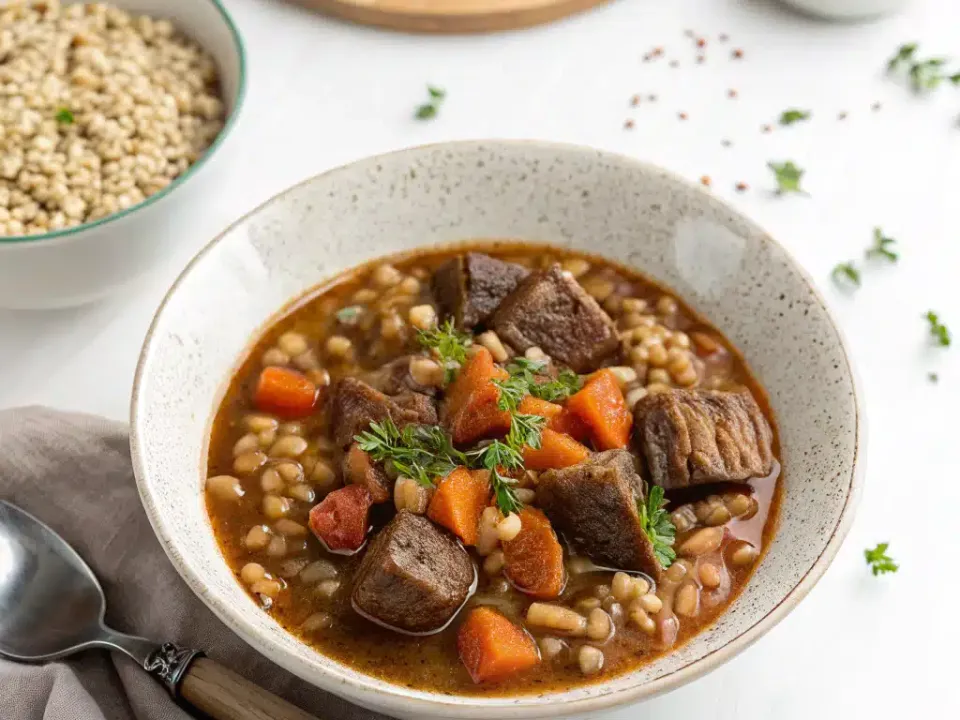
This is the plainest recipe in the collection and the shortest: sear the beef, deglaze the pan, put everything else in, and leave it for seven to eight hours. Peas go in for the last ten minutes and that is the whole of it.
What makes it a stew rather than a soup is the barley. A cup of it goes in dry at the start and spends the whole cook absorbing broth, so the pot thickens on its own without a slurry or a roux anywhere in the method.
The Pot, in Proportion
Six steps, and step 3 puts nearly everything in at once. There is no order to learn here — what matters is how much of what, because the barley will keep drinking the broth for eight hours.
- Beef broth6 cups
- Beef chuck2 lb, cubed
- Vegetablesonion, 3 carrots, 3 celery
- Mushrooms8 oz, optional
- Pearl barley1 cup
- Peas1 cup, at the end
One cup of barley against six cups of broth looks modest, and it is the reason the stew thickens without any flour or slurry. Barley absorbs several times its own volume as it cooks, so a pot that looks soupy at hour one is a stew by hour seven.
Why This Recipe Works
- The barley thickens the stew as it cooks. Pearl barley absorbs several times its volume, so the broth it drinks is what turns six cups of liquid into something that coats a spoon. Nothing else in the recipe is a thickener.
- Searing is not optional here. Step 1 has it plainly, in batches, three to four minutes a side — and step 2 deglazes the pan into the cooker so nothing browned is left behind.
- Two savoury ingredients do the background work. A tablespoon of Worcestershire and a tablespoon of soy sauce, there as an umami boost, both go in at step 3 and neither is identifiable in the finished bowl.
- Peas go in at the very end. Ten minutes, stirred through. Frozen peas added at the start would be grey and collapsed by hour seven.
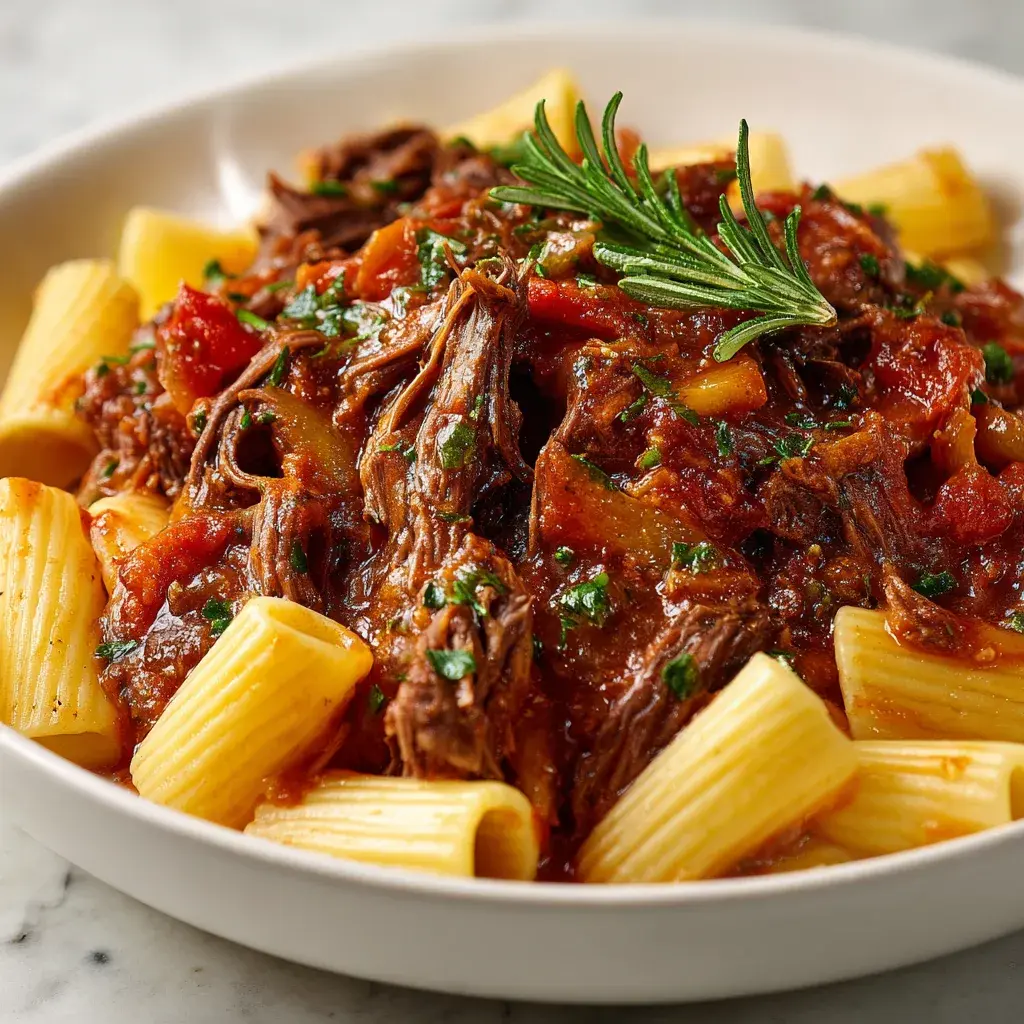
- No sauce is built separately. Everything seasons the same pot, which is the opposite of the Italian beef ragu — that recipe softens a soffritto in the skillet first and treats the sauce as its own construction.
Ingredient Notes
- Pearl barley
- 1 cup, and it must not be quick-cooking. Pearl barley holds its shape over seven to eight hours; quick-cooking would disintegrate.
- Beef chuck
- 2 pounds, cut into 1-inch cubes. Cubes rather than a roast, so the stew can be served with a spoon rather than shredded.
- Kosher salt
- 1 1/2 teaspoons, divided: a teaspoon seasons the beef before searing, and the remaining half-teaspoon goes into the pot at step 3.
- Cremini mushrooms
- 8 ounces, marked optional. They go in at the start with everything else rather than being held back.
- Frozen peas
- 1 cup, and the ingredient line itself says to stir them in at the end. They need ten minutes, not eight hours.
How to Make It
Season and sear the beef
Pat the cubes dry, season with a teaspoon of the salt and the pepper, then brown in batches in hot oil, about 3–4 minutes a side.
Deglaze the pan
Red wine into the hot skillet, scraping up the browned bits, simmered a minute, then poured into the cooker.
Everything else, in one go
Onion, carrots, celery, garlic, tomato paste, Worcestershire, broth, barley, bay leaf, thyme, rosemary, mushrooms, soy sauce and the remaining half-teaspoon of salt.
Slow cook
Covered, LOW for 7–8 hours or HIGH for 4–5, until the beef is fork-tender and the barley has plumped.
Peas at the end
Stirred in for the final ten minutes. Discard the bay leaf and adjust salt and pepper.
Thicken further if you want to
For a thicker stew, simmer uncovered for ten minutes.
What the Barley Is Doing
Barley is a grain with a lot of starch on its surface, and as it cooks it releases that starch into the liquid around it while absorbing the liquid itself. Both things thicken the pot, which is why this stew needs no flour, no cornstarch and no reduction step.
It also means the stew keeps changing after it is cooked. Left in the fridge overnight the barley goes on absorbing, and what was a stew becomes closer to a thick porridge. That is not a fault — it is what barley does — and a splash of broth on reheating brings it back.
The recipe's optional final step offers simmering uncovered for ten minutes if you want it thicker still. That is worth doing before serving rather than after, because the barley will do some of that work for you overnight anyway.
Success Tips
- Pat the beef genuinely dry before searing. Wet cubes steam, and step 1 wants them browned.
- Do not skip deglazing even if you leave the wine out — use extra broth in its place.
- Crush the dried rosemary as specified. Whole needles do not soften.
- Taste at the end rather than the start. Six cups of broth reducing for eight hours concentrates the salt that is already there.
Serving Ideas
Served warm from the pot, garnished with chopped parsley. It is a complete bowl as it is — beef, grain and vegetables are all already in it.
Storage and Reheating
Refrigerate
Cool and refrigerate in a sealed container. Expect it to be noticeably thicker the next day as the barley keeps absorbing.
Reheat
Reheat gently with a splash of beef broth or water to loosen it back to a stew consistency.
Frequently Asked Questions
Can I use quick-cooking barley?
Use pearl barley, not quick-cooking. Quick-cooking barley is pre-steamed and would break down completely over seven to eight hours.
It was much thicker the next day. Did it go wrong?
No. Barley keeps absorbing liquid after cooking, so a leftover portion is always thicker than a fresh one. Loosen it with a splash of broth when you reheat.
Do I need the red wine?
It is optional — use more broth in its place. Either way, use it to deglaze the skillet at step 2 rather than pouring it straight into the cooker.