
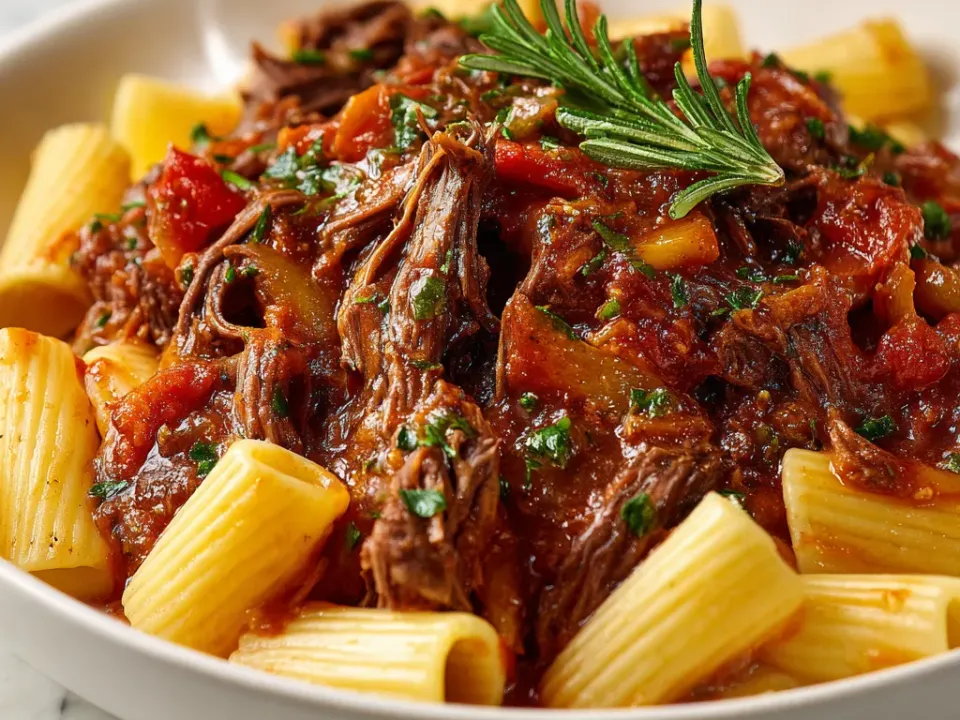
This is a ragu in the long-braise sense: beef cooked until it collapses into a tomato sauce, rather than a mince simmered on the stove. Three large pieces of chuck go in whole, spend eight hours with crushed tomatoes and a Parmesan rind, and get shredded straight into the pot at the end.
The twenty minutes of prep is all skillet work — sear, soffritto, deglaze — and it is what separates this from tipping a jar over some beef. Everything after that happens without you.
How to Make It
Season and sear the beef
Salt and pepper the chuck pieces all over, then brown them deeply in olive oil over medium-high, 2–3 minutes a side. Transfer to the cooker.
Soften the soffritto
In the same skillet, onion, carrot and celery for 3–4 minutes until softened, then garlic and tomato paste for one minute more until fragrant.
Deglaze
Red wine into the hot pan, scraping up the browned bits, simmered two minutes to reduce slightly. All of it goes into the cooker.
Add everything else
Crushed tomatoes, beef broth, balsamic, rosemary, thyme, fennel seeds, red pepper flakes, bay leaves and the Parmesan rind. Stir to combine.
Slow cook
Covered, LOW for 8 hours or HIGH for 4–5, until the beef is fork-tender.
Shred in the pot
Fish out the bay leaves and the Parmesan rind, then shred the beef with two forks directly in the sauce.
Judge the consistency
Thin sauce goes uncovered on HIGH for 15–20 minutes; thick sauce gets a splash of broth. Adjust salt and pepper.
Finish and serve
Stir in the optional butter for gloss, then serve over pappardelle, polenta or gnocchi with herbs and grated Parmesan.
The One Judgement Call
Step 8 is the only instruction in this recipe that does not tell you what to do. It tells you what to look at, and the answer decides which of two things happens next.
Lift the lid after shredding. Is the sauce loose around the beef, or has it tightened up?
Too thin
Take the lid off and cook on HIGH for 15–20 minutes to reduce.
Eight hours under a lid means nothing evaporates. Uncovering is the only way the sauce loses water, and a quarter of an hour is usually enough.
Too thick
Stir in a splash of broth.
A ragu that has tightened will keep tightening on a hot plate. Loosening it in the cooker is easier than trying to fix it in the bowl.
Why the Skillet Comes First
Three separate things happen in that pan and each one leaves something behind for the next. The beef browns and leaves fond. The soffritto softens in that fond and picks it up. The wine dissolves whatever is still stuck and carries all of it into the cooker.
Do them in order and do not clean between them. Step 3 says 'in the same skillet' for exactly this reason — a washed pan between the sear and the vegetables throws away the part you were building.
If you skip the wine, use beef broth instead. Deglazing with either works; deglazing with nothing means the browned bits stay in the sink.
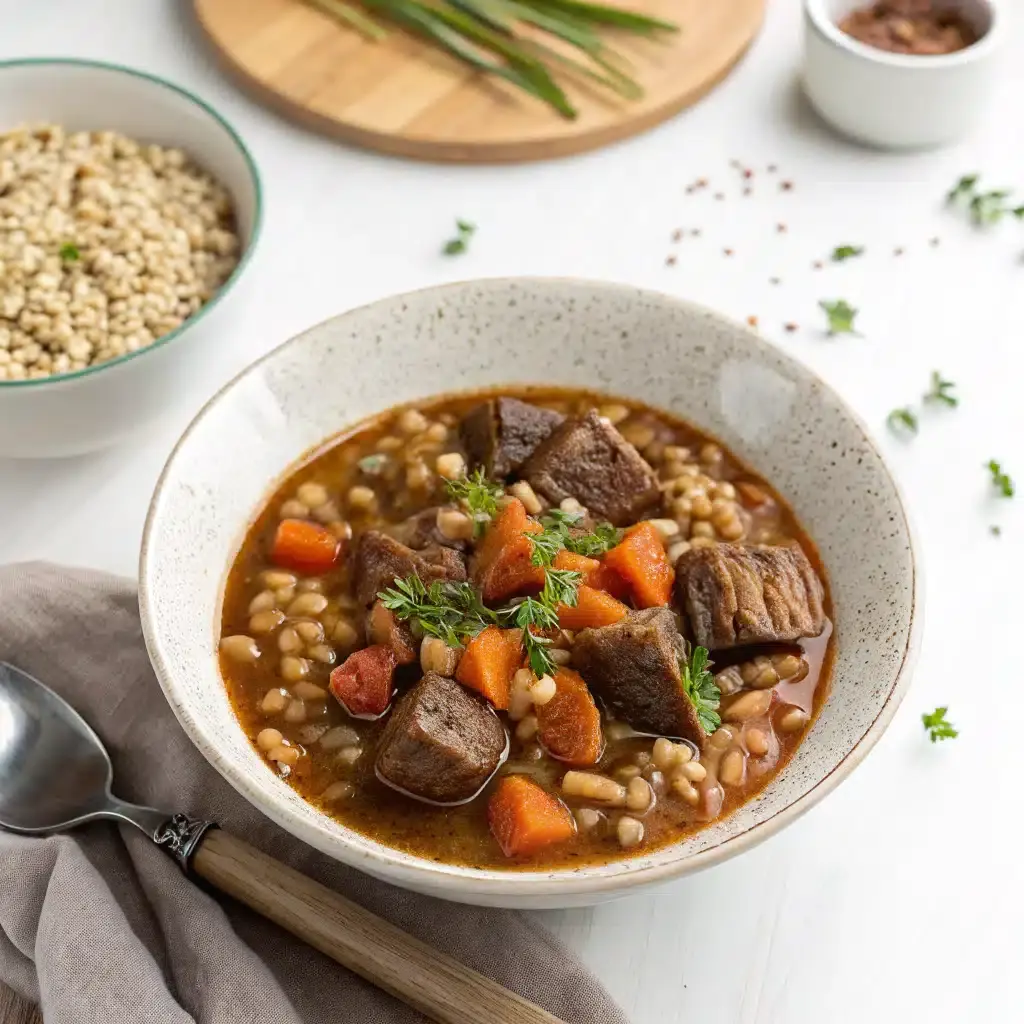
This is the one thing the Italian beef sandwiches do not do — that recipe puts everything into the cooker cold and lets pepperoncini brine carry the flavour instead. The beef barley stew takes the middle road, searing and deglazing but skipping the soffritto. All three are chuck; the difference is entirely in what happens before the lid goes on.
Why This Recipe Works
- The soffritto is cooked, not just added. Onion, carrot and celery get three to four minutes in the pan the beef has just left, then garlic and tomato paste for a minute more. Raw vegetables dropped into the cooker would soften but never sweeten.
- Tomato paste is fried before liquid touches it. A minute in a hot pan takes the raw edge off and deepens the colour, which is why step 3 puts it in with the garlic rather than with the crushed tomatoes.
- The Parmesan rind is a seasoning, not a garnish. It sits in the sauce for the full eight hours and is fished out at step 7. It is marked optional but recommended, and it is the cheapest umami in the recipe.
- The beef is shredded in the pot. Step 7 keeps it in the sauce rather than moving it to a board, so nothing is lost and the shreds finish soaking in what they cooked in.
Ingredient Notes
- Beef chuck roast
- 3 lb, trimmed and cut into 3 large pieces. Cutting into pieces rather than leaving it whole gives the sear more surface and lets the sauce reach further into the meat.
- Parmesan rind
- One rind, optional but recommended. It goes in at step 5 and comes out at step 7 with the bay leaves.
- Fennel seeds
- 1 tsp, lightly crushed. Crushing is specified — whole seeds stay whole through eight hours and are noticeable in a spoonful of sauce.
- Dry red wine
- 1 cup, used to deglaze at step 4 and simmered two minutes to reduce slightly. Beef broth is a direct substitute.
- Crushed tomatoes
- One 28 oz can. This is the volume the halved state is built around: a 14 oz can is a standard size, which is why 4 servings works cleanly and 12 would not.
Serving Ideas
Serve it over pappardelle, polenta or gnocchi, finished with chopped basil or parsley and freshly grated Parmesan. Wide ribbons hold a shredded sauce better than thin strands do.
Success Tips
- Cut the soffritto finely. It is meant to disappear into the sauce rather than stay as recognisable vegetables.
- Sear in batches if the pan is crowded — three large pieces of chuck in one skillet will steam instead of browning.
- Taste before you adjust salt at step 8. The Parmesan rind and the broth have both been seasoning the sauce for eight hours.
- Stir the optional butter in off the heat at the very end for gloss, as step 9 has it.
Storage and Reheating
Refrigerate
Cool and refrigerate in a sealed container. The sauce thickens further as it chills, which is normal for a ragu.
Reheat
Reheat gently with a splash of broth or water to bring it back to the consistency it had in the pot. It does not need to be reduced a second time.
Frequently Asked Questions
Can I make this without the red wine?
Yes. Beef broth is a direct substitute for the cup of wine. Whichever you use, still deglaze with it — the point of step 4 is lifting the browned bits, not the alcohol.
What if I do not have a Parmesan rind?
It is marked optional. The sauce works without it; it is simply the one ingredient here that adds savoury depth for almost nothing, so it is worth saving a rind if you grate Parmesan often.
My sauce is watery after eight hours. Did I do something wrong?
No — a covered slow cooker loses almost no liquid, so a loose sauce is expected. Step 8 handles it: take the lid off and cook on HIGH for 15–20 minutes.