
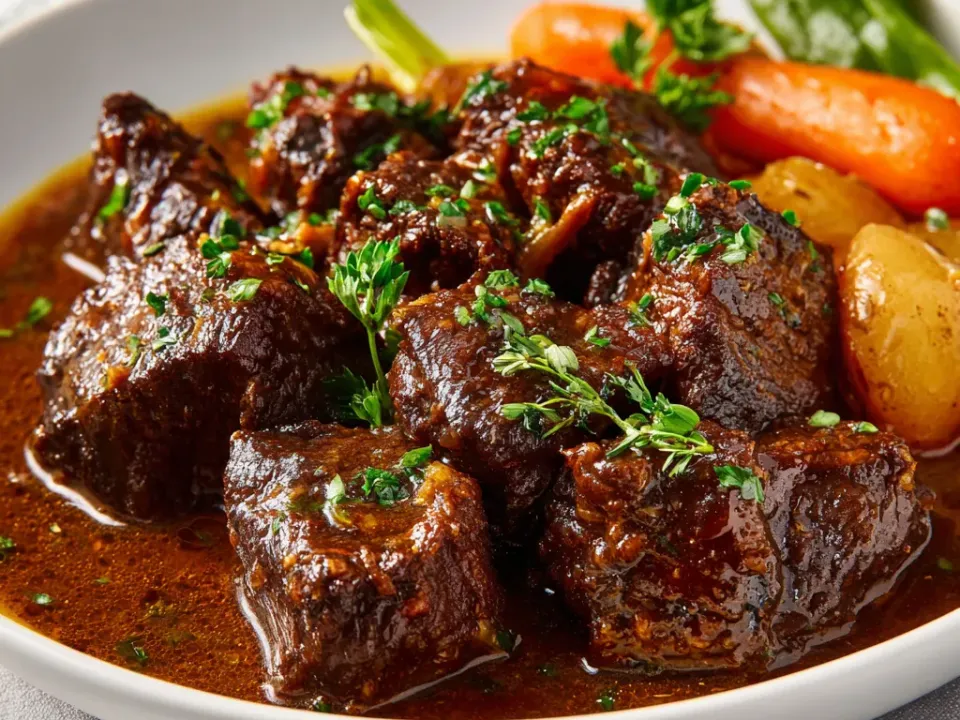
A beef Manhattan is an open-faced plate from the Midwest: toasted bread, shredded beef, mashed potatoes and enough gravy to tie the three together. It is a diner dish, and the slow cooker suits it because the beef wants eight hours and no attention.
The part that is not hands-off is the gravy. The braising liquid gets strained into a saucepan, simmered, thickened with a cornstarch slurry and finished with butter — about ten minutes of real work at the end, and the difference between a plate that holds together and one that goes soggy.
Why This Recipe Works
- The gravy is made in a separate pan. Straining the liquid out of the cooker leaves the onion and any rendered fat behind, so what thickens is clean braising stock rather than everything that was in the pot. It is the only recipe here that bothers, and it shows on the plate.
- Some gravy goes back into the beef, some is kept. Step 8 splits it deliberately. Beef that has soaked in gravy stays juicy under the toast; gravy held back is what you ladle over the finished plate.
- Chuck is used whole, then shredded. Eight to ten hours on LOW breaks the connective tissue down to gelatin, which is what makes the shreds soft rather than stringy.
- Butter goes in at the very end. Whisked into the simmering gravy after the slurry, it adds sheen. Added earlier it would simply be absorbed into eight hours of braise.
How the Plate Is Built
A Manhattan is an assembly, and the order is the whole dish. Step 10 puts it together from the bread up.
More gravy, ladled over
The last pass goes over everything. This is why step 8 keeps some gravy back rather than stirring it all through the beef.
Mashed potatoes
A scoop in the centre of the plate rather than spread across it.
A first spoonful of gravy
Over the beef, before the potatoes go on.
Shredded beef
Piled straight onto the bread, already loosened with some of the gravy at step 8 so it does not dry out while the rest of the plate is assembled.
Toasted Texas toast
Two thick slices per plate, toasted so they hold up under gravy rather than dissolving into it.
How to Make It
Season, and sear if you can
Salt and pepper the roast all over. Searing is optional but recommended — a drizzle of oil in a hot skillet, 2–3 minutes a side.
Build the base
Sliced onion and minced garlic go into the cooker first, with the roast laid on top of them.
Mix and pour the liquid
Whisk the beef broth, Worcestershire, balsamic if using, and thyme, then pour it over the roast and drop in the bay leaf.
Slow cook
Covered, LOW for 8–10 hours or HIGH for 4–5, until the beef is fork-tender.
Shred
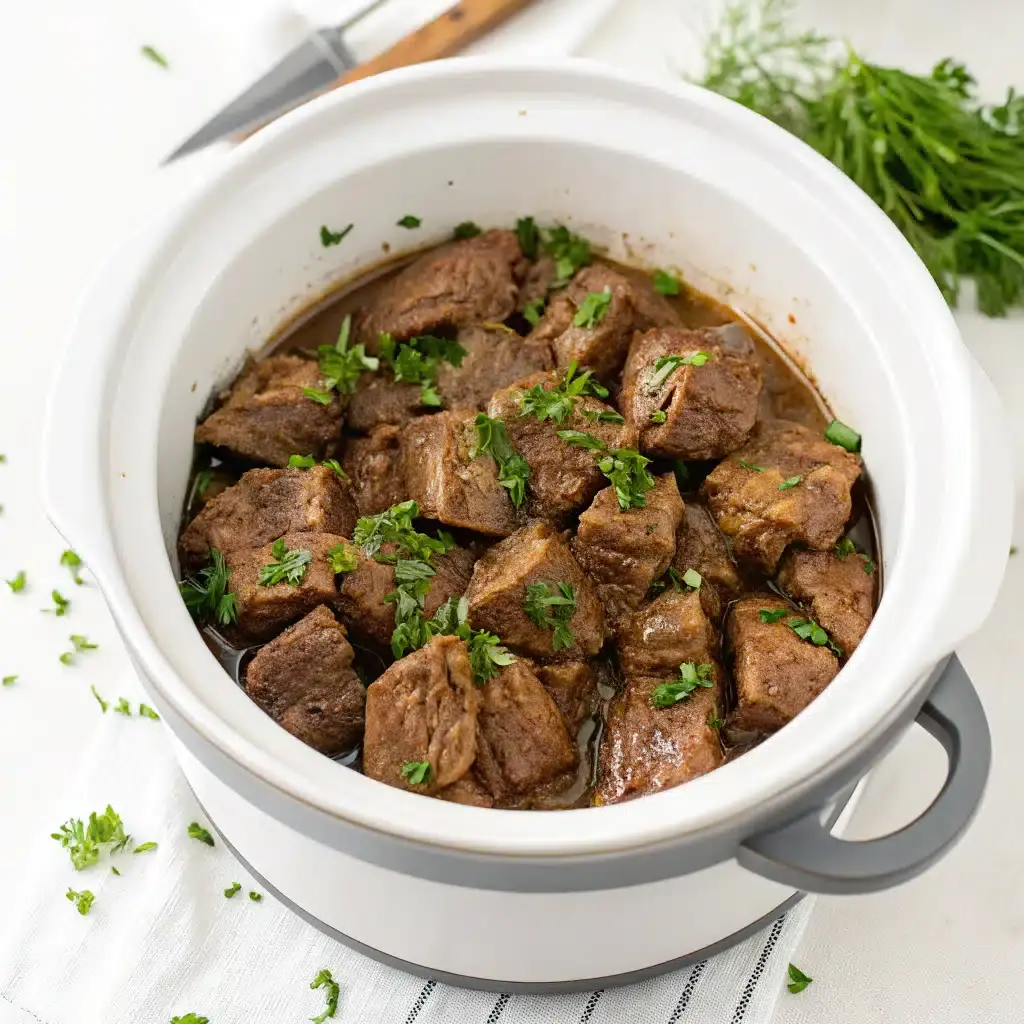
Move the roast to a board, discard the bay leaf, and pull it apart with two forks, leaving the large fatty pieces behind.
Make the gravy in a saucepan
Strain the cooking liquid into a saucepan and bring it to a simmer. Whisk in the cornstarch slurry and give it 2–3 minutes to thicken, then stir in butter for sheen and season to taste.
Split the gravy
Some goes back into the shredded beef to keep it juicy; the rest is held for serving.
Mash the potatoes, if making them
Boil the cubed Yukon Golds in salted water 12–15 minutes until tender, drain, and mash with butter and warm milk. Season.
Assemble the plates
Toasted Texas toast, then shredded beef and spoonfuls of gravy, then a scoop of mashed potatoes in the centre, then more gravy ladled over. Serve hot.
The Gravy, Step by Step
Strain first. Step 7 pours the cooking liquid through a strainer into a saucepan, which leaves the softened onion and the bay leaf behind. What is left is a clear braising stock that will thicken evenly.
Bring it to a simmer before the slurry goes in, then whisk and give it two to three minutes. Cornstarch needs heat to set, and a slurry stirred into liquid that is merely warm will thin out again as it sits.
Butter is last and optional. Whisked in off the boil it gives the gravy sheen; it is there for texture rather than flavour. Season at this point, not before — reducing concentrates whatever salt was already there.
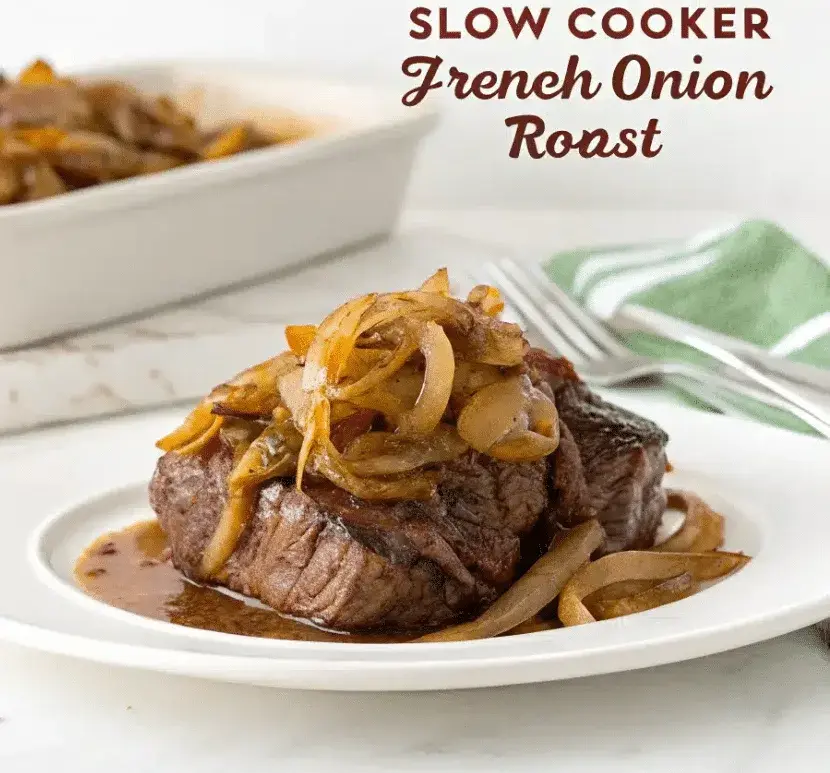
It is worth knowing this is not the only way. The slow cooker French onion roast thickens its jus in the cooker itself, and so do the gluten-free beef tips, which sit on HIGH for twenty to thirty minutes with the slurry stirred straight in. Both work. Straining into a pan is faster and gives a cleaner gravy, at the cost of washing one more thing.
Ingredient Notes
- Beef chuck roast
- 3 lb, boneless, excess fat trimmed. Trimming matters here more than in a stew: the liquid becomes gravy, and fat that renders into it has to be strained or skimmed back out.
- Texas toast
- 12 slices for 6 servings — two per plate. Thick-cut white bread is the stated alternative. The thickness is functional: a standard sandwich slice collapses under gravy.
- Cornstarch slurry
- 2 tbsp cornstarch with 2 tbsp cold water. Cold water is what keeps it from seizing when it hits the simmering liquid.
- Balsamic vinegar
- 1 tbsp, optional, there for depth. It is a small amount against 2 cups of broth and reads as background rather than as vinegar.
- Mashed potatoes
- Homemade or store-bought both work. For homemade: 2 lb Yukon Golds, butter, warm milk, salt and pepper, boiled 12–15 minutes.
Success Tips
- Sear the roast if you have the pan out. It is optional but recommended, at 2–3 minutes a side.
- Toast the bread while the gravy simmers rather than earlier. It goes soft quickly once it is off the heat.
- Shred with two forks and discard the large fatty pieces as you go — they will not soften further and they are obvious on an open plate.
- Keep the gravy hotter than you think you need. It is ladled over cold-ish potatoes and toast, and it loses heat fast on the plate.
Serving Ideas
This is the whole plate: toast, beef, potatoes, gravy. If you are making the mashed potatoes from scratch, boil them while the beef finishes so both are hot at once.
Storage and Reheating
Refrigerate
Keep the shredded beef and the gravy in separate containers in the fridge. Stored together the beef keeps absorbing and the gravy thins.
Reheat
Warm the beef with a splash of its gravy so it loosens rather than dries, and reheat the remaining gravy separately. Toast fresh bread each time — reheated toast does not hold up.
Frequently Asked Questions
Can I use ordinary sliced bread instead of Texas toast?
Use Texas toast or thick-cut white bread. The thickness is the point rather than the brand: a standard-thickness slice softens through before the plate reaches the table.
Do I have to strain the liquid into a separate pan?
That is what step 7 does. Straining removes the cooked-down onion and gives you a clear liquid to thicken, and a saucepan reduces and thickens far faster than a slow cooker set to HIGH.
Are store-bought mashed potatoes acceptable here?
Yes — the mashed potatoes can be homemade or store-bought; the homemade version is an optional extra rather than a requirement.