
Soup

Tom Kha Gai: Irresistible Thai Coconut Soup That Warms Your Soul

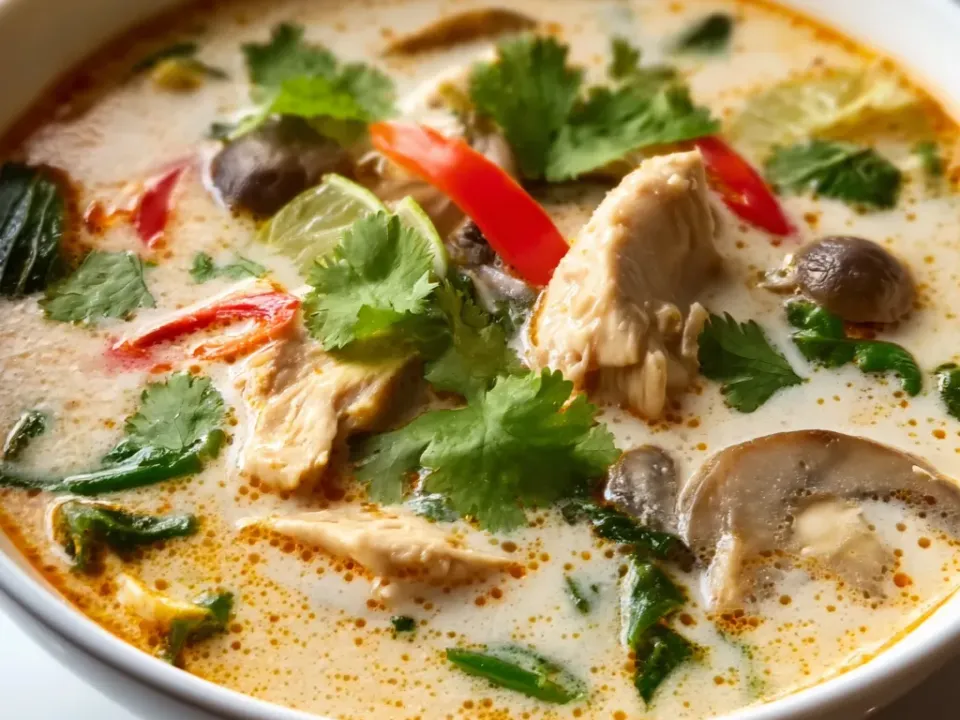
Tom Kha Gai: Flavorful Thai Coconut Soup has been my absolute comfort food obsession since I first tasted it during a rainy evening in Thailand years ago. This aromatic soup balances creamy coconut milk with bright lime, fragrant lemongrass, and tender chicken in a dance of flavors that feels like a warm hug in a bowl. There’s something magical about that first spoonful—the way the galangal and kaffir lime leaves infuse the broth with their distinctive perfume. I’ve perfected this recipe through countless Sunday afternoons, and I’m thrilled to share my version that brings authentic Thai flavors right to your kitchen.

Recipe

Why You’ll Love This Tom Kha Gai: Flavorful Thai Coconut Soup

A Symphony of Thai Flavors

The beauty of Tom Kha Gai lies in its perfect balance of five essential Thai taste elements: creamy, spicy, sour, salty, and slightly sweet. The velvety coconut milk creates a luxurious base while lemongrass, galangal, and kaffir lime leaves infuse the broth with their aromatic essence. I still remember my first attempt—standing in my kitchen with fresh lemongrass in hand, that citrusy scent filling the air as I crushed it with my knife handle. The fragrance alone transported me back to those steamy Bangkok food stalls where I first fell in love with this soup.

Quick & Nourishing Comfort

This soup comes together in just 30 minutes yet tastes like it’s been simmering all day. It’s my go-to when I need something deeply satisfying but don’t have hours to spend in the kitchen. The protein from tender chicken pieces combined with the healthy fats from coconut milk makes this soup surprisingly filling. On cold evenings when my bones feel chilled or when seasonal sniffles hit, this soup’s warming properties work like natural medicine—the ginger and chilies provide that gentle heat that seems to radiate through your entire body.

Essential Tips & Tricks

Ingredient Authenticity Matters

Don’t skip the galangal—it’s different from ginger and provides that distinctive flavor that makes Tom Kha Gai authentic. If you can’t find fresh, look for frozen options at Asian markets. Kaffir lime leaves are another non-negotiable; their citrusy aroma is irreplaceable. I once tried substituting regular lime zest and while tasty, it wasn’t the same magical experience. For the coconut milk, always choose full-fat for that silky texture that makes this soup so luxurious. Check out these honey garlic butter roasted carrots for another dish where ingredient quality truly elevates the final result.

Perfect Texture & Timing Techniques

The secret to perfectly tender chicken is adding it after your broth has developed flavor. I slice my chicken against the grain into thin pieces that cook quickly without becoming tough. Another game-changing technique: don’t let the soup boil aggressively after adding coconut milk—a gentle simmer preserves that silky texture without separation. I learned this the hard way after watching my first batch break into an oily mess! For mushrooms, add them just 5 minutes before serving so they maintain their texture while absorbing the aromatic broth.

Serving Ideas & Creative Variations

Traditional & Modern Accompaniments

Serve your Tom Kha Gai with a small bowl of jasmine rice on the side—the fragrant grains soak up the coconut broth beautifully. I love setting out little dishes of fresh lime wedges, sliced Thai chilies, and cilantro so everyone can customize their bowl. For a complete Thai-inspired meal, pair with a simple cucumber salad dressed with rice vinegar and a touch of sugar. The cooling crunch creates a perfect counterpoint to the soup’s warmth, much like how Mexican Corn Chicken Soup benefits from fresh, contrasting garnishes.

Exciting Flavor Adaptations

While traditional Tom Kha Gai features chicken, this recipe welcomes delicious variations. Try swapping chicken for plump shrimp or firm tofu for a vegetarian version. For a heartier meal, I sometimes add thinly sliced sweet potatoes or a handful of rice noodles. My favorite weekend adaptation includes adding a splash of makrut lime-infused vodka for adults—a trick I discovered during a cooking class in Chiang Mai. The alcohol cooks off, leaving behind an intensified citrus note that elevates the entire dish to restaurant quality.

Storage & Troubleshooting Guide

Proper Storage Methods

Store leftover Tom Kha Gai in an airtight container in the refrigerator for up to 3 days. The flavors actually intensify overnight, making it even more delicious the next day! I often make a double batch specifically for leftovers. For freezing, I recommend storing just the broth without the coconut milk and chicken—then add fresh elements when reheating. When ready to serve again, gently warm over medium-low heat, never boiling, to preserve the soup’s silky texture and prevent the coconut milk from separating.

Common Issues & Solutions

If your soup lacks depth, you likely need more umami elements. Try adding an extra tablespoon of fish sauce or a splash of mushroom broth. Soup too spicy? Don’t reach for water—it won’t help! Instead, add more coconut milk to mellow the heat while maintaining flavor balance. If your coconut milk separates (appearing grainy or oily), lower the heat immediately and whisk gently until reincorporated. I’ve rescued many pots this way! Remember that authentic Tom Kha Gai should have a slight oily sheen from the coconut cream—this is normal and desirable.

Frequently Asked Questions

What’s the difference between Tom Kha Gai and Tom Yum soup?

Tom Kha Gai features coconut milk as its base, creating a creamy, rich soup, while Tom Yum is a clear, broth-based soup. Both share similar aromatics like lemongrass and kaffir lime leaves, but Tom Kha Gai has a milder, sweeter profile.

Can I make Tom Kha Gai: Flavorful Thai Coconut Soup vegetarian?

Absolutely! Substitute the chicken with firm tofu or mushrooms and use vegetable broth instead of chicken broth. Replace fish sauce with soy sauce or coconut aminos for that umami element while keeping it completely plant-based.

Where can I find ingredients like galangal and kaffir lime leaves?

Asian grocery stores typically carry these items fresh. Many mainstream supermarkets now stock them in international sections. Alternatively, look for them frozen or dried online—they’ll still provide authentic flavor.

How spicy is traditional Tom Kha Gai?

Traditional Tom Kha Gai is moderately spicy with a pleasant warmth rather than overwhelming heat. You can easily adjust the spice level by adding more or fewer Thai chilies based on your preference.

Can I make this soup ahead for a dinner party?

Yes! Prepare the broth with aromatics a day ahead, then reheat gently and add the coconut milk and chicken shortly before serving. This actually improves the flavor while saving you time.

Final Thoughts

Tom Kha Gai: Flavorful Thai Coconut Soup represents everything I love about cooking—transformative ingredients, balanced flavors, and the power to transport us to distant places through taste. There’s something deeply satisfying about creating this aromatic masterpiece in your own kitchen, watching as simple ingredients become something greater than their parts. I hope this recipe brings you the same joy and comfort it’s brought me over the years. Whether you’re seeking warmth on a chilly evening or wanting to impress dinner guests with your Thai cooking skills, this soup delivers every time. Don’t forget to check out more recipes at Pinterest for more inspiration!