
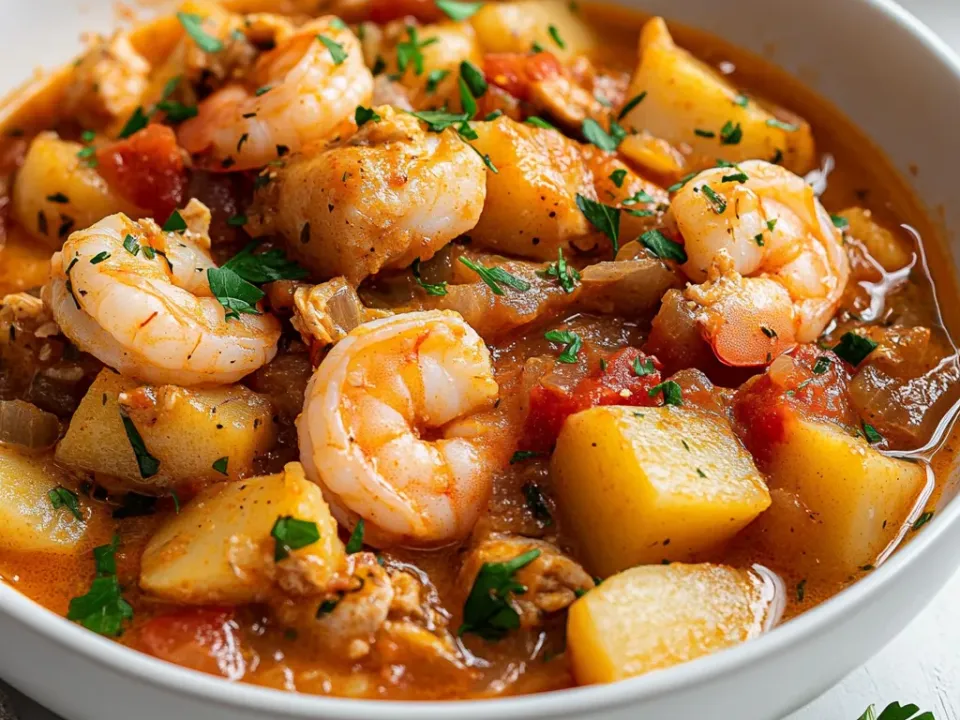
Onion, celery, garlic, crushed tomatoes, stock and white wine go into the cooker together and cook on LOW for four hours.
A pound of cod and half a pound of shrimp are stirred in at the end and cooked on HIGH for fifteen to twenty minutes, then finished with parsley and lemon.
Why This Recipe Works
- The seafood is the last thing in, by a margin of four hours. Fish and shrimp cook in minutes; everything before them is broth-building they would not survive.
- The heat goes to HIGH for the finish. The broth is already at temperature and the seafood needs to come up quickly — a slow finish is what makes shrimp rubbery.
- A cup of dry white wine, or more broth. Four hours is long enough to cook off the alcohol entirely and leave the acidity, which a tomato base of this size needs.
- Firm white fish, cut to an inch. Cod holds together in a stew at that size; a delicate fish or a smaller dice would disappear into the broth.
- Parsley and lemon are added off the heat. Both are top notes, and both are gone if they go in before the lid does.
Four Hours, Then Fifteen Minutes
This is a slow-cooker recipe where the slow cooking has nothing to do with the seafood. The broth takes four hours; the fish and shrimp take a quarter of an hour, and putting them in early is the only way to ruin it.
Hour 0, everything at once
Olive oil, onion, celery, garlic, crushed tomatoes, stock, wine, oregano, smoked paprika, salt and red pepper flakes
No browning and no transferring. The whole broth is built in the cooker, which is what makes it a one-pot recipe rather than a one-pot claim.
Hours 0 to 4, LOW
Nothing
Four hours is what softens the celery and onion into the tomato and takes the raw edge off a cup of wine.
Hour 4, and the heat goes UP
1 pound cod in 1-inch pieces and 1/2 pound raw shrimp
HIGH, not LOW. The broth is already hot and the seafood needs to cook fast — a gentle finish leaves shrimp rubbery and fish falling to threads.
15 to 20 minutes later
2 tablespoons parsley and 1 tablespoon lemon juice
Both go in off the heat. Lemon added earlier would be cooked flat, and it is the only acid brightening a long-simmered tomato base.
Ingredient Notes
- Firm white fish such as cod
- A pound, cut into inch pieces. Firm is the operative word — a soft fish flakes apart into the broth in the fifteen minutes it has.
- Raw peeled and deveined shrimp
- Half a pound, raw. Pre-cooked shrimp would be past their best within minutes of going in and would turn tough.
- Dry white wine or additional broth
- A cup, and the recipe offers the substitution itself. Dry rather than sweet; four hours concentrates whatever sugar is in it.
- Seafood stock or low-sodium chicken broth
- Two cups. Seafood stock deepens the dish, chicken broth keeps it neutral, and either works — the recipe names both.
- Lemon juice
- A tablespoon, stirred in at the end. It is the finishing acid, not a cooking ingredient.
How to Make It
Build the broth in the cooker
Add the olive oil, onion, celery, garlic, crushed tomatoes, stock, wine or extra broth, oregano, paprika, salt and red pepper flakes to a 6-quart slow cooker.
Cook on LOW
Cover and cook on LOW for 4 hours.
Add the seafood
Stir in the fish and shrimp.
Finish on HIGH
Cover and cook on HIGH for 15 to 20 minutes, just until the fish flakes easily and the shrimp are opaque.
Fresh finish
Stir in the parsley and lemon juice.
Season and serve
Taste and adjust salt before serving.
Success Tips
- Resist adding the seafood early; four hours of broth first is the whole method.
- Turn the cooker to HIGH before the fish goes in, not after.
- Cut the cod to an even inch so it finishes together.
- Stop at the moment the shrimp turn opaque — they carry on cooking in hot broth.
- Taste for salt at the very end; crushed tomatoes and stock vary a great deal.
Serving Ideas
Crusty bread for the broth, and a green salad if you want anything else. It is a full bowl on its own.
Storage and Reheating
Refrigerate
Refrigerate in an airtight container for up to 2 days. Seafood stews are best eaten soon after they are made.
Freeze
Freezing is not recommended. Cooked shrimp and flaked white fish both go woolly on thawing.
Reheat
Reheat gently over low heat only until warm. Bringing it back to a simmer cooks the seafood a second time.
Frequently Asked Questions
Can I add the seafood at the start?
No. Four hours would turn the cod to threads and the shrimp to rubber. The recipe is explicit: the seafood goes in near the end.
Can I use frozen fish and shrimp?
Thaw and pat them dry first. Frozen seafood added straight in drops the broth temperature and releases water, so the fifteen to twenty minutes is no longer enough.
What if I do not cook with wine?
Use another cup of broth — the ingredient line offers exactly that. You lose a little acidity, which the lemon at the end partly covers.
Can I use a different fish?
Any firm white fish will do: haddock and pollock both work. Avoid delicate fish, which will not hold its shape for even fifteen minutes.