
Ten ingredients and fifty-five minutes, in one oven-safe skillet.
The sauce is built in the pan the roast came out of, while the roast rests. Nothing else is served alongside it.
Why This Recipe Works
- Tying the tenderloin evenly is what makes one temperature true end to end.
- Searing before roasting gives the dark herb crust on every medallion.
- Roasting to 145°F and resting three minutes leaves a rosy centre.
- The pan drippings are the base of the sauce, so nothing is wasted.
- Cream and butter off the boil turn a sharp reduction pale and glossy.
Ingredient Notes
- Centre-cut beef tenderloin roast
- Two pounds, tied evenly. Even thickness is what lets a single 145°F reading be true from one end to the other.
- Chopped thyme, plus sprigs
- A tablespoon chopped into the rub, and whole sprigs kept back for the platter. The title names neither use.
- Dijon mustard and pure maple syrup
- Two tablespoons each, whisked into the drippings. Dijon rather than a grain mustard — this sauce is smooth and pale, not speckled.
- Heavy cream and butter
- A third of a cup and a tablespoon, stirred in at the end. They are what turn a sharp reduction into the pale golden sauce that pools around the base.
How to Make It
Oven to 425°F, the tenderloin tied and rubbed with thyme
Heat oven to 425°F. Tie the tenderloin evenly, rub with olive oil, salt, pepper, and chopped thyme.
Seared all over, roasted to 145°F, rested three minutes
Sear the roast on all sides in an oven-safe skillet, then roast until the center reaches 145°F; rest at least 3 minutes before slicing.
Roast moved to a platter, the skillet kept over medium heat
Transfer the roast to a platter and keep the skillet over medium heat.
Dijon, maple and broth whisked into the drippings, cream and butter stirred in
Whisk Dijon, maple syrup, and broth into the pan drippings; reduce briefly, then stir in cream and butter for a pale golden sauce.
Sliced into thick medallions, arranged on a bare platter
Slice the whole roast into thick medallions and arrange them together on a bare platter with no side dishes.
Sauce spooned over, thyme sprigs on top
Spoon the pale maple-Dijon cream sauce over the slices and garnish with thyme sprigs.
The Platter Is Part of the Recipe
This tenderloin is served A WHOLE ROAST SLICED ON A PLATTER WITH PALE CREAMY MAPLE-DIJON SAUCE AND NO SIDES. The last three words matter as much as the temperature. Five rungs, and the platter is the fifth.
TIED first - because one reading has to be true throughoutOven heated to 425°F before the roast is touched
2 lb of CENTRE-CUT BEEF TENDERLOIN TIED EVENLY, then rubbed with 1 tbsp OLIVE OIL, 1 1/2 tsp KOSHER SALT, 1 tsp CRACKED BLACK PEPPER and 1 tbsp CHOPPED THYME. A tenderloin tapers, and an untied one gives you a thin end at well-done while the thick end is still raw. Tying it into an even cylinder is what makes a single thermometer reading mean anything.
SEARED, then ROASTED - in the same oven-safe skillet425°F until the centre reads 145°F
SEARED ON ALL SIDES, then ROASTED UNTIL THE CENTRE REACHES 145°F. The skillet matters more than it looks: it takes the sear, it goes into the oven, and it keeps every drop of drippings that the sauce is later built from. A roasting rack would give you the same beef and no sauce at all.
RESTED at least 3 minutes - and this is the safety lineAt least 3 minutes, off the heat
For food safety, COOK WHOLE-CUT BEEF TO AT LEAST 145°F AND REST 3 MINUTES BEFORE SLICING. That rest is not only for juiciness; it is half of the USDA standard for a whole cut. It also happens to be exactly the window in which the pan sauce gets made, so nothing is waiting on anything.
The PAN SAUCE - sharp first, PALE lastMedium heat, reduced briefly before the dairy goes in
The roast moves to the platter and THE SKILLET STAYS OVER MEDIUM HEAT. 2 tbsp DIJON MUSTARD, 2 tbsp PURE MAPLE SYRUP and 1/2 cup BEEF BROTH WHISKED INTO THE PAN DRIPPINGS and REDUCED BRIEFLY - briefly, because a hard reduction turns maple bitter. Then 1/3 cup HEAVY CREAM and 1 tbsp BUTTER STIRRED IN FOR A PALE GOLDEN SAUCE. Smooth Dijon rather than a grain mustard, and dairy at the end: that is why this sauce reads pale and creamy rather than glossy and speckled.
The BARE PLATTER - and nothing else on itServed as one roast, sliced, on an otherwise empty platter
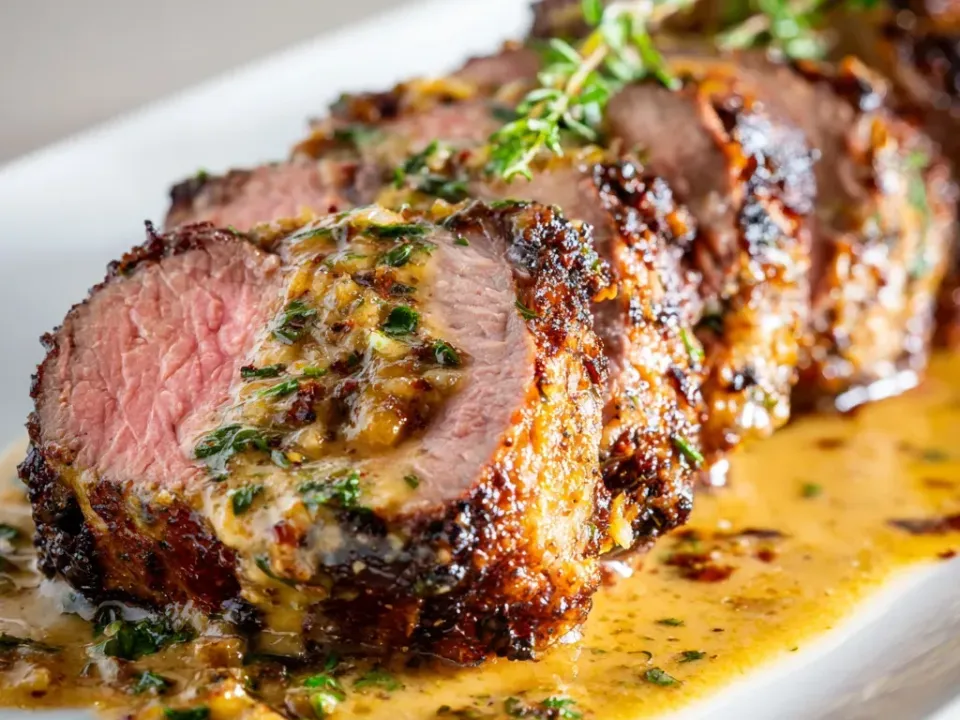
SLICED INTO THICK MEDALLIONS and ARRANGED TOGETHER ON A BARE PLATTER WITH NO SIDE DISHES. Together, as a whole roast reassembled, rather than portioned onto individual plates. NO SIDE DISH, NO VEGETABLE AND NO STARCH OF ANY KIND belongs here. Then the PALE MAPLE-DIJON CREAM SAUCE SPOONED OVER THE SLICES so it pools around the base, and FRESH THYME SPRIGS on top - a garnish the title does not name.
Success Tips
- Tie the roast before it goes near heat; an untied tenderloin cooks unevenly.
- Pull it at 145°F and rest it — carryover finishes it while you build the sauce.
- Add the cream off the hardest heat so it stays pale rather than splitting.
Serving Ideas
Six servings of thick tenderloin medallions with a dark herb-crusted exterior and rosy pink centre on a bare rectangular platter, spooned with pale golden maple-Dijon cream sauce and topped with fresh thyme sprigs.
Frequently Asked Questions
What should I serve on the platter with it?
Nothing. This roast goes onto a bare platter with no side dish, no vegetable and no starch. The sliced medallions and the sauce pooling around them are the whole plate.
Is 145°F right for medium-rare?
145 degrees Fahrenheit with a three-minute rest is the USDA minimum for a whole cut of beef, and it is what this recipe is written to. Rest it before slicing.
Why is the sauce pale rather than glossy amber?
Because cream and butter go into it at the end. Smooth Dijon and maple reduced with broth would stay dark and sharp; the dairy is what makes it pale, golden and rounded.