
Twelve ingredients, an hour of rising and thirty-five minutes in the oven.
The loaf is made from scratch and it is pulled apart rather than sliced. The scoring is what makes that possible.
Why This Recipe Works
- Bread flour has the protein to hold a deeply cut loaf together as it rises in the oven.
- Deep cuts open as the loaf expands, which is what makes the sections separable.
- Pressing cheese into the cuts puts crust on the inside surfaces too.
- Low-moisture mozzarella browns rather than releasing water onto the loaf.
- Parmesan is dry and salty, so it blisters where mozzarella alone would only melt.
Ingredient Notes
- Bread flour
- Three and a quarter cups. Its higher protein is what holds a deeply cut round together while it rises in the oven rather than letting it fall open.
- Low-moisture mozzarella
- One cup, shredded. Low-moisture is deliberate — fresh mozzarella would release water into the cuts instead of browning on top of them.
- Grated Parmesan
- Half a cup, alongside the mozzarella. Dry and salty, and it is what gives the crust its blistered browned patches.
- Dried oregano, basil and rosemary
- A teaspoon, a teaspoon and half a teaspoon, mixed into the cheese. Dried rather than fresh, so they hold up to thirty-five minutes at 400 degrees.
How to Make It
A soft dough, kneaded and risen an hour
Mix flour, yeast, sugar, salt, warm water, and olive oil into a soft dough. Knead until smooth and let rise until doubled, about 1 hour.
Shaped round, scored deeply in a crosshatch
Shape into a round loaf on parchment and score deeply in a crosshatch pattern so the cuts open into pull-apart sections.
Herbs and cheese pressed in, not just on
Heat oven to 400°F. Mix oregano, basil, rosemary, mozzarella, and Parmesan and press the mixture heavily over the surface and into the cuts.
Thirty to thirty-five minutes, until blistered
Bake 30 to 35 minutes until the loaf is deep golden and the cheese crust is browned and blistered.
Parsley — and nothing to dip it in
Finish with parsley. Do not add filling, dip, or pooled garlic butter.
Scoring Is Not Decoration Here
A pull-apart bread usually gets its sections from being built out of separate pieces. This one is a SINGLE ROUND LOAF, and the sections come from cuts - which means the scoring has to survive an hour of oven spring and the dough has to be strong enough to take it.
A dough built for cuttingKneaded until smooth
3 1/4 cups of BREAD FLOUR with 2 1/4 tsp instant yeast, 1 tbsp sugar, 1 tsp salt, 1 cup warm water and 2 tbsp olive oil, kneaded SMOOTH. Bread flour rather than all-purpose is the structural choice: a loaf about to be cut deeply and then loaded with half a pound of cheese needs gluten strength, or the cuts simply tear wider and the round collapses sideways in the oven.
Risen until DOUBLED, about an hourAbout 1 hour
The full rise, before any cutting. The gas developed here is what pushes the scored sections APART in the oven - a loaf cut before it has risen properly has nothing to open the cuts with.
Scored DEEPLY, in a crosshatchDeep enough to open
Shaped into a round ON PARCHMENT and cut in a crosshatch SO THE CUTS OPEN INTO PULL-APART SECTIONS. Depth is the whole technique. A shallow slash is decorative and seals over as the loaf expands; a deep one keeps opening, and by the end of the bake each section can be lifted away by hand. Shaping on the parchment matters too - a scored round is fragile to move.
Cheese pressed INTO the cuts, not just over themInto the cuts
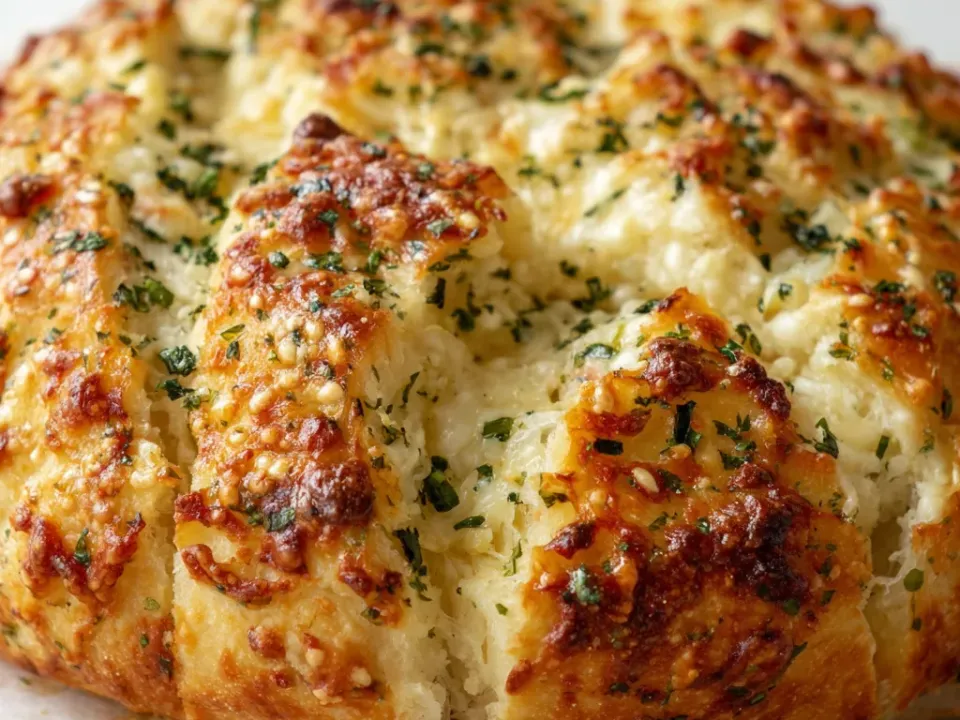
1 cup low-moisture MOZZARELLA and 1/2 cup PARMESAN mixed with 1 tsp oregano, 1 tsp basil and 1/2 tsp rosemary, pressed HEAVILY over the surface AND INTO THE CUTS. This is why the crust reaches the inside faces of every section rather than sitting as a lid on top. The two cheeses do different jobs: low-moisture mozzarella gives the melt without releasing water into the dough, and dry salty Parmesan is what BLISTERS. Dried herbs rather than fresh, because 35 minutes at 400F would scorch fresh leaves to bitterness - and the green flecks through the cheese are part of the finished loaf.
400F for 30 to 35 minutes, to DEEP golden30 to 35 minutes
Until the loaf is deep golden and the cheese crust is BROWNED AND BLISTERED ACROSS THE WHOLE SURFACE - not merely melted. Then 1 tbsp of parsley. Step 5 refuses the three things that would turn this into a different bread: no filling, no dip, and no pooled garlic butter. The crust is the finish, and the loaf goes to the table on its parchment to be pulled apart.
Success Tips
- Score deeper than feels comfortable — shallow cuts close up again as the loaf rises.
- Work the cheese down into the cuts rather than only across the top.
- Bake on the parchment you shaped it on; a scored round is hard to move once cut.
Serving Ideas
Ten servings pulled apart at the table straight from the parchment, the cheese crust browned and blistered with green herb flecks through it and a soft white crumb showing in the cuts. No dip and no garlic butter.
Frequently Asked Questions
How deep should the cuts go?
Deep enough that they open into distinct sections as the loaf bakes. Shallow scoring closes up in the oven and you end up with a round loaf you have to slice.
Can I use fresh mozzarella?
Low-moisture is what this needs. Fresh mozzarella carries a lot of water, which would soak into the cuts instead of browning over them.
Should I serve it with garlic butter?
No — step 5 rules out a dip, a filling and pooled garlic butter. The cheese crust is the whole finish.