
Eleven ingredients and an hour and twenty minutes, plus the cooling a pound cake needs before it will slice.
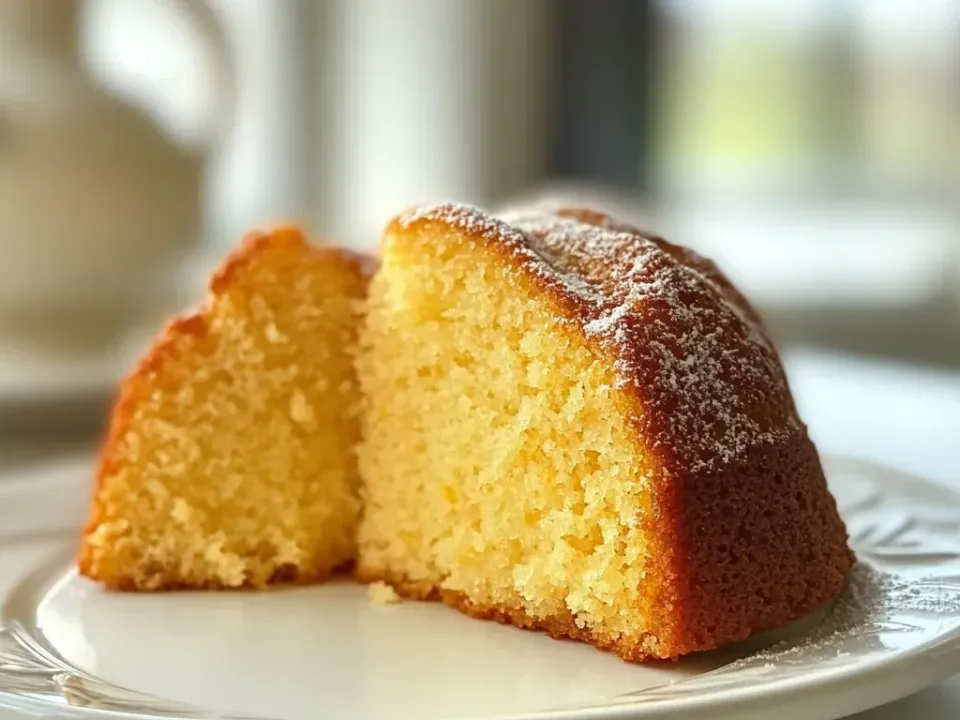
It is baked low and long — 325 degrees for up to sixty-five minutes — which is what gives the dense crumb and the dark crust all the way round.
Why This Recipe Works
- Creaming the butter and sugar until fluffy is the only leavening this cake really gets.
- Beating the eggs in one at a time keeps a rich batter from splitting.
- Sour cream adds acidity and fat without thinning the mixture.
- 325 degrees for an hour browns the crust while the middle sets slowly.
- Folding just until combined protects the close crumb the cake is meant to have.
Ingredient Notes
- Lemon zest and juice
- Two tablespoons of zest and three of juice, both into the batter. Finely grated, so nothing shows as pieces in the finished crumb.
- Sour cream
- Half a cup, folded in alternately with the flour. It is what keeps a dense cake moist rather than dry.
- Certified gluten-free 1-to-1 flour
- Two cups with xanthan gum. The blend has to be a certified one — that is the whole of the dietary claim here.
- Powdered sugar
- Two tablespoons, dusted at serving. The only thing that goes on this cake after the oven.
How to Make It
Low oven, lined loaf pan
Heat oven to 325 degrees Fahrenheit. Grease and line a 9x5-inch loaf pan.
Dry whisked
Whisk gluten-free flour, baking powder, and salt.
Cream, then eggs, then lemon
Cream butter and sugar until fluffy. Beat in eggs one at a time, then lemon zest, lemon juice, and vanilla.
Fold with sour cream, just combined
Fold in the dry ingredients alternately with sour cream just until combined.
Fifty-five to sixty-five minutes, cool fully
Bake 55 to 65 minutes until deeply browned around the crust and a tester comes out clean. Cool fully before slicing.
Powdered sugar only
Dust only with powdered sugar. Do not add glaze, syrup, poppy seeds, fruit pieces, or visible lemon garnish.
Where the Lemon Actually Is
A lemon cake usually carries its lemon on the outside - a glaze, a syrup soak, a slice on top. Step 6 rules all three out. Everything below is therefore in the crumb, which is the only place this cake has to work.
- Aroma2 tbsp finely grated lemon zest
- The larger of the two lemon measures and the one doing most of the flavour work. Zest carries the oils, and it goes in with the eggs while the butter is still soft enough to hold them. FINELY grated is not just a preference - there should be no visible zest in the crumb.
- Acid3 tbsp fresh lemon juice
- Juice is sharp where zest is fragrant, and three tablespoons against 1 1/2 cups of sugar is what stops the cake reading as plain sweet. It also reacts with the 1/2 tsp of baking powder, which is nearly all the lift this batter gets.
- Fat and tenderness1 cup butter and 1/2 cup sour cream
- The butter is creamed with the sugar until FLUFFY - that aeration is the cake's real leavening. The sour cream is folded in alternately with the flour and does two jobs: acidity again, and enough fat to keep a dense crumb from drying over an hour in the oven.
- Structure2 cups certified gluten-free 1-to-1 flour with xanthan gum, 4 eggs
- Folded JUST UNTIL COMBINED. A pound cake is meant to be close and dense; overworking a gluten-free blend past that point takes it from dense to heavy, which is a different thing.
There is nothing to adjust at the end, and that is the point. 55 to 65 minutes at a low 325F browns the crust DEEPLY all the way round while the middle sets slowly, then it cools FULLY before slicing. The only thing added afterwards is 2 tbsp of powdered sugar, dusted on - no glaze, no syrup, no poppy seeds, no fruit and no lemon garnish.
Success Tips
- Cream properly at the start; there is almost no chemical leavening to fall back on.
- Fold only until the last streaks of flour are gone, and no further.
- Let it cool fully — a warm pound cake tears rather than slices.
Serving Ideas
Ten thick slices on white plates, the dense golden crumb inside a deeply browned crust, dusted with a little powdered sugar. Nothing else on the plate.
Frequently Asked Questions
Should there be a lemon glaze?
No — step 6 rules out glaze, syrup, poppy seeds, fruit pieces and any visible lemon garnish. Powdered sugar is the only finish.
Why is the crumb so dense?
Because a pound cake is meant to be. Half a teaspoon of baking powder in two cups of flour, baked low at 325, gives a close crumb rather than an airy one.
Which flour should I use?
A certified gluten-free 1-to-1 blend with xanthan gum. That is the requirement, and nothing beyond it is claimed.